One way to think about developments in the action RPG genre over time.
Following on from my first post in this series of musings, I’m going to briefly divide the ARPG genre into some easy ‘generations’ for the purpose of reference. I’ll come back to these from time to time in the future.
More disclaimers: This is by no means intended as a semiformal or comprehensive delineation, I simply have not done enough research or played enough of the multitude of ARPGs out there to be able to do such a thing even if I wanted to. That’s actually quite a large task and, honestly, I have no interest in doing so. This just isn’t a “serious” enough topic to turn into a more significant project. So consider the following very limited reference to be purely functional.
I am aware that, especially in the category I have designated ‘generation 1’, that there was a fair amount of experimentation with systems and control schemes, and some of the following categories contain titles that do not fit into the terms, despite arguably fitting the overall ‘ARPG’ category. That’s fine, I’m going mainly off the most established titles and conventions, and outliers are what they are. For the potentially more invested audience, I imagine this is your jumping off point: if you’re looking for something vaguely close to an academic study, this ain’t it. There’s undoubtedly things I haven’t considered over the course of this series of musings, but if it sparks a response then by all means – speak!
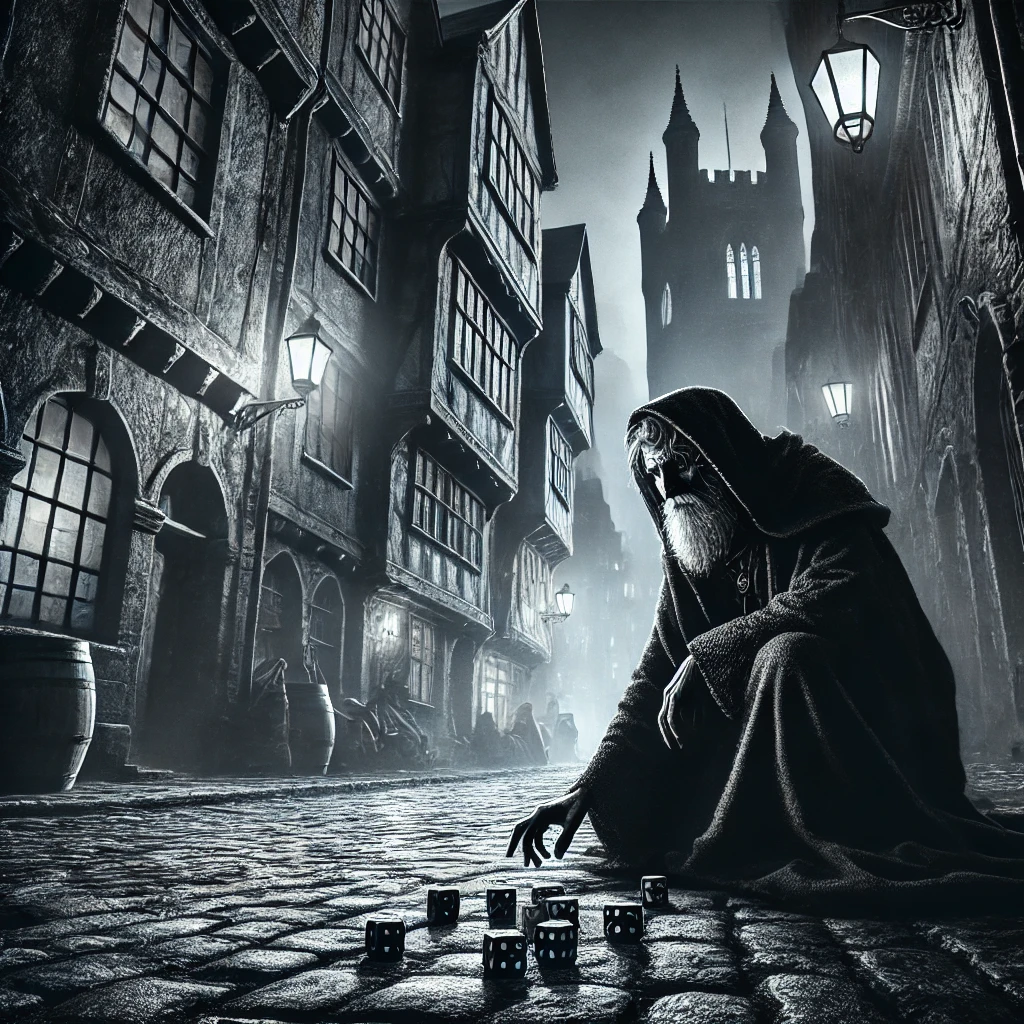
Generation 1: Rogue without a pause
The emergent ‘ascended roguelike’. This covers games like Diablo I & II, FATE, Torchlight 1 & 2, et al. This era is effectively the discovery phase – David Brevik and co. were originally going to have Diablo I be a turn-based affair. Blizzard, working with Condor Games, urged the developers to make the game real time. Brevik was resistant to the idea but, following a vote, agreed to try it. It turned out that, after testing real-time combat, he was extremely enthusiastic about it.
So that’s your starting point. Having worked out that you can do Angband in real-time and even have graphics, developers were understandably very excited. Here we have a sort of D&D adventure for the people who just want to murderhobo. If your average RPG wants to establish a setting and a narrative, this is the equivalent of an early pulp thriller that starts with a moody detective monologuing over a dead body and by page three they’ve already been in a shootout and shagged two broads. The player is still rolling dice for everything, but unlike Ultima or Baldur’s Gate, the plot skips the majority of the establishing fluff and just sends you straight into a cave to kill things.
So the systems in this early generation are comparatively rudimentary, skill trees are fairly linear, the procedural generation is simple, and all dodging, blocking, and aiming is dependent on the dice rolls going on in the background.
As an aside, there’s usually a fair amount of depth to roguelikes that would become incredibly chaotic if brought into real-time. I don’t know if anything specifically was simplified in Diablo I‘s development after making it real-time, but I would presume there’s an upper limit to feature complexity that you can get away with if you’re trying to get to combat as fast as possible. I imagine that trying to play Nethack or Dungeon Crawl Stone Soup without being able to pause and consider what any action might do, would be extremely chaotic (to say nothing of the headache that would necessitate for the UX and UI designers, given the amount of actions available at any moment in time). Personally, I’m totally up for that experience, but I’m also one of those weird people who likes Dwarf Fortress, so take my opinions with a grain of salt.
Generation 2: Tradition triumphant
The roidrage era of traditional ARPGs. This is arguably where ARPGs go from being glorified D&D combat simulators to their own entities, and some of them do to extents that are awe-inspiring, even today. This era saw the rise of Path of Exile, Grim Dawn, and Diablo III.
Taking advantage of technological advances, ARPGs could double down on crunching numbers. In table top terms, these games were the equivalent of those images of some board game designer who has built the most arcane and in-depth systems without any account for their actual practicality. Spaceship layouts with 150 slots for all manner of components that all have their own subsystems, you have to calculate the trajectory of your own piss in order to establish how many dice to roll for number of people insulted at a a random relative’s wedding, and a rulebook that would make Tolstoy despair. A single round of gameplay takes several weeks and enough rolls to start a competitor to Greggs with. If these people knew how to code, they’d make Path of Exile.
The systems are still fully dependent on dice rolls, but the games look nicer, the animations are smoother. The ability to chain systems together and bolt on other ideas without needing to worry about spending a week rolling dice and calculating outcomes for every single attack means you get a lot of systemic depth added in this generation. Skill trees within skill trees, skills interacting with other skills, monsters with new mechanics, maps becoming slightly more vertical.
By the end of generation two, the genre is seeing how far they can push the boundaries of dice rolling and it leads to some very interesting spectacles and some very important steps forwards. Path of Exile‘s support nodes completely changed ARPGs as players understood them, and they did amazing things with the trigger conditionals – trigger on kill, trigger on crit, etc. For a while after their introduction, I’m pretty sure there is an ongoing competition to see who can break the servers the hardest by chaining conditionals together into rolling feedback loops.
This truly is where the pull comes from – you ask ‘can I throw a fireball that, if it hits a dude, triggers an ice storm that calls Greggs and orders a sausage roll every time it kills something?’ Then you go and see if the answer is yes. This is why I periodically feel compelled to reinstall PoE. Then I remember that it takes an unholy amount of time and resources to get to the point where you can ‘complete’ a build that will order a sausage roll on kill, satisfying though it may be. For an example, see this absolute lunatic.
In fact, I’m pretty sure that while Diablo IV is still trying to chase the dopamine drip from getting a new shiny item or levelling up in 2024, PoE utterly superseded that back in 2010 by just allowing the players make reaction chains that birthed algorithmic abominations. Picking up a legendary sausage roll has nothing on the flood of dopamine that comes from immolating your own graphics card at an Olympic pace. Seriously, the Path of Exile community should scare you.
As a further aside, arguably this type of mechanical doubling down is where we get the recent resurgence in Vampire Survivors-esque wave survival games.
But as the second generation rolled on, and players worked out the core concepts that let you chew through content like a rabid Sonic the Hedgehog as long as the game mechanics allowed for it. Taken to its end state, the games effectively stopped working after a fashion.
There’s a now-famous quote by Civilization IV designer Soren Johnson, who said, ”given the opportunity, players will optimize the fun out of a game.”
This is arguably what happened to generation two. Effectively, the players learned how to pre-emptively break the game. There isn’t a great deal that developers can do once the players know how to do that at that pace. Grinding Gear Games tried to restrain the clear speed meta once or twice, but this only made the player base ape out like a WallStreetBets speculator on bath salts. This continues to happen every so often with regular cycles of nerfs and changes, and the community throws a temper tantrum and demands to go even faster. Then they go watch a streamer with too much time on their hands theory craft in Excel for 12 hours to create a new variation of the same build but with different particles. Everybody copies that, and the cycle goes on.
So when you go into a generation two ARPG for the first time, you go into it, knowing that it’s already been solved – doesn’t matter how new it is. If it relies entirely on maths, it’s solved before day 1. So people approach it in one of two ways:
One: They ignore as much information as possible. They go through the content on their own terms, experimenting and learning as they progress and they slowly gain an increasing awareness of the mechanics and layers, which they then manipulate to their advantage. They may even play solo self found for their first run so they can fully inoculate themselves from back seating, spoilers, etc. Solo self found is basically single player mode where a player does not interact with other players and relies entirely on the drops they find themselves. No trading, no grouping – just the player and the maps. This used to be an unofficial challenge, but increasingly games have incorporated it as an official mode.
If you’re this person – I like you. You understand that the experimentation is the meat of these games.
Two: The player opens google, searches up a meta build, opens the game, opens their wallet, trades for all the currency and items, and then they do group runs until they can use all the stuff to make the build work. Then they kill the last boss in 0.5 seconds. Congratulations. Having beaten the game by proxy without ever investing in the experience, they uninstall until the next expansion while wondering why their victory feels so hollow.
If you’re this person – you baffle me. Why even bother?
Generation 3: One small click for fans…
The current moment represents a subgenre in a state of transition. It’s defined by titles like Diablo IV, Path of Exile 2, and Last Epoch. It is defined by a move towards more skill-dependent gameplay, with elements such as active dodge and block mechanics as opposed to evasion percentages, mouse aim, and some integration of WASD controls.
Last Epoch is an interesting one here – it initially belonged to generation two, but with the 1.1 Harbinger of Ruin update, particularly the implementation of movement and dodge mechanics, I would now consider it to be part of the third generation.
If I am correct, it may be a short-lived generation from a title number perspective. The success of games in neighbouring genres such as God of War and Elden Ring, the ongoing popularity of looter shooters, and the comparative underwhelming performance of Diablo IV, may have influenced a shift in the broader gaming industry. It is worth noting that, while seasons 1-3 saw relatively sedate player counts, seasons 4 and 5 seem to have seen a resurgence in popularity. It’s worth noting that this is a ropey thing to measure, especially for Diablo IV, as many players play via the Blizzard launcher, the statistics for which we do not have, and most measurements seem to rely on a combination of Steam numbers and Twitch viewers – the inclusion of the latter making estimated player count especially dubious.
 Words and Chaos
Leave a comment