Going… going… gone. Your audience from your setting.
Product copy is ever evolving. An untold number of books have been written on the subject, Hey, Whipple, Squeeze, The Copywriters Handbook, and A Self-Help Guide for Copywriters being three of the most well-known to amateurs and newbies. A quick Google search will net you a near-infinite number of articles, videos, infographics, and other media on the subject of copywriting.
As Western economies continue their intensifying race to the bottom, much copywriting content over the last few years has positioned the profession as the latest in the slew of get-rich-quick schemes. Weaponising the toxic cocktail of zero-hours contracts, stagnating wages, and roid-raging rents, as side hustles become experience-neutral necessities for workers.
So, copywriting has gained a certain amount of notoriety, and in the process begun to overlap with day trading, sports betting, and crypto speculation, in the pantheon of professions that finfluencers will promise you that can achieve potential returns in the 10s of thousands per month.
If you’re one of the idiots who believe that, let me help you: It ain’t happening. I know Forbes spat out an AI-generated article about how it was one of the fastest ways of making infinite money, but if you’re taking Forbes seriously, you’ve got bigger problems than getting good at writing…
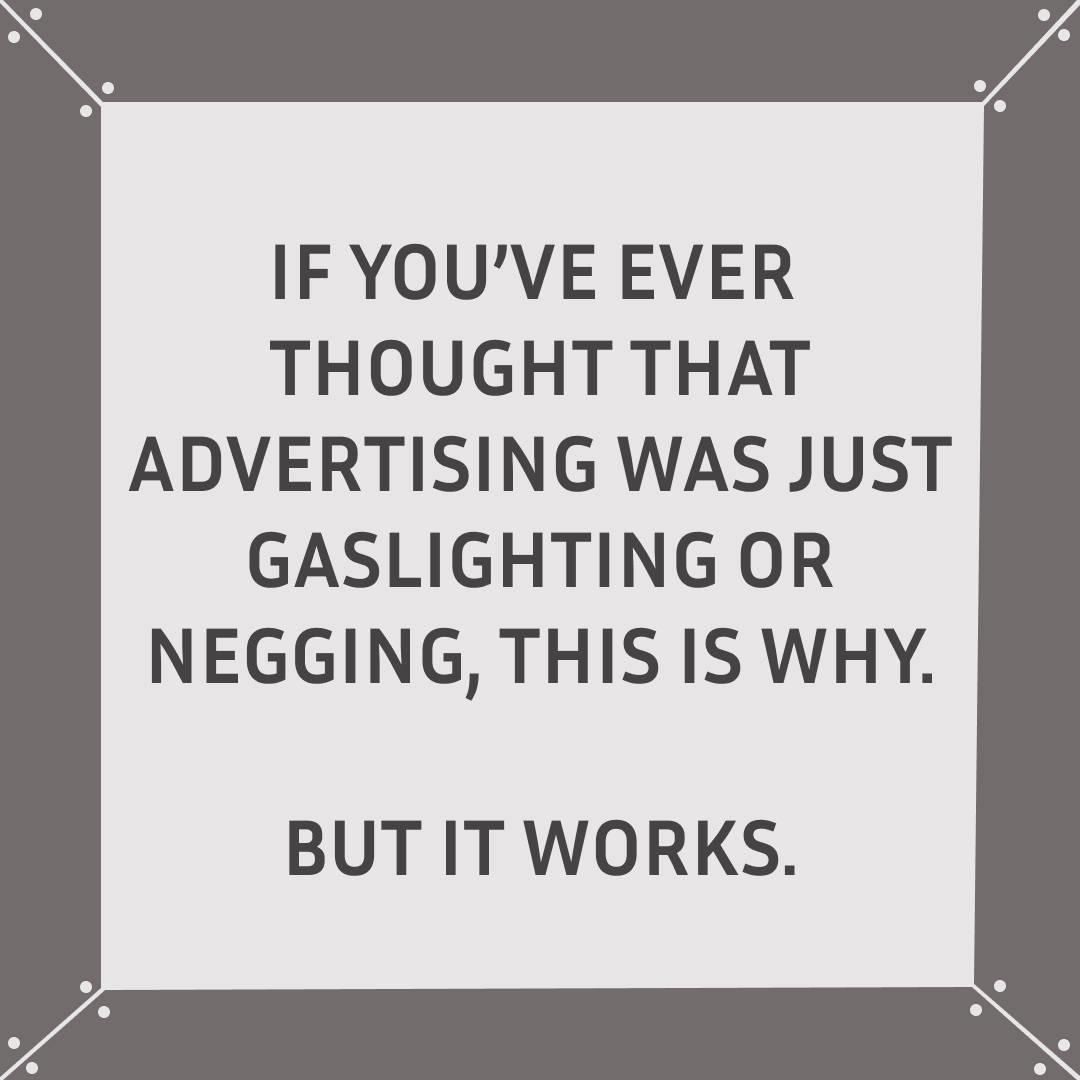
And speaking of seedy promises that exploit consumer desperation and insecurity, this week we’re looking at the PAS framework. I’ll explain what it is and elaborate on how you can use it in fictional copywriting to enhance your scene descriptions, world building, and environmental storytelling. I’ll also show you some amateur attempts of my own so you can laugh at them and not feel so confused by all of this pseudo-technical talk of frameworks.
What is PAS?
PAS stands for:
- Problem – What is the audience’s pain point? Use it to evoke discomfort related to your product.
- Agitate – Find a way to inflame that sense of discomfort.
- Solution – Position your product as the remedy for your lead’s problem and the thing that makes the pain go away.
PAS is a bit like the edgier, moodier side of AIDA, which we talked about last week; an angsty teen of the advertising world. Its focus on negativity lends it a certain level of antagonism.
As narrative theory can teach us, a sense of urgency helps to deepen the audience investment in the story. So too can it help to drive quick conversions. Sort of parallel to upselling in a shop, or those racks next to the checkouts in supermarkets full of cookies and gum and whatnot. They are all laid out like that because studies have shown that when you put those spur-of-the-moment purchases just before the customer actually puts money down, there’s a higher chance of selling them. Wild, right?
PAS is more directly emotion-driven in comparison to AIDA. This makes it useful for more targeted demographics with high-intensity pain points, such as cosmetic products like weight loss programs, acne solutions, financial services, etc. That highly emotive construction means that it is, in theory, good at converting audience members to customers.
The PAS framework applies well to any product or service where there is a sense of urgency. A lot of PAS marketing revolves around creating the idea of limited time to build a sense of desperation. You’ve heard, in fiction, that many good plots have an element of time involved in them – ie: you have 24 hours to bring the money or your nan explodes, etc – which works by creating a sense of urgency in the audience. It’s exactly the same logic.
However, as you might have guessed, this focus on building pressure and cornering your customer into making snap decisions, can be perceived in highly negative terms. That emphasis on negative emotions, guilt, vulnerability can make the advertising come off like a pick-up artist trying to neg their way into a customer’s proverbial pants (or perhaps not so proverbial, depending on the product). This emphasis is especially problematic in a world that is placing increasing emphasis on ’emotional intelligence’. And advertising has a big enough image problem as is. Which is why PAS doesn’t work for any sort of product or service that is additive or aspirational. Because establishing a brand image of deliberately preying on emotional vulnerability would just make people hate that brand. As such, it is not a good tool for building a brand, it is a tool designed to hurt and convert.
I mentioned that PAS tends to prey on the emotionally vulnerable, and I guess a bunch of copywriters might want to turn around and tell me that they aren’t that predatory? On the one hand: Yes, true. You’re not a bad person. On the other hand: Bitch, please. It is what it is. No judgement, we’re all just using the tools at our disposal.
For the record, I’m willing to believe that there are less obnoxious ways to use PAS, but from my admittedly limited understanding, it’s the framework that most reflects the stereotypical conception of advertising as a whole. Which, ironically, isn’t doing it many favours.
The funny thing is that, as much as the PAS framework might be perceived as “ethically questionable” – it works.
It should come as no real surprise, that as much as I have frowned at PAS, and as much as we all like to consider ourselves to be wise to these kinds of emotional tricks, shady tactics, gaslighting, what have you; the data is in. The PAS framework has a higher conversion rate than the comparatively benign AIDA. Meaning that we’re still prone to falling for those negative reinforcement games, no matter how much we might think we aren’t. It’s the old truism: you are not immune to propaganda just because you’re aware that it is there. The same thing applies to advertising. Indeed, one of the first books that became a gospel for the marketing world, before propaganda was associated with the negative sentiments that it is today, is Edward Bernays’ Propaganda. Worth a read.
Worldbuilding with PAS
Ok, so on to the good stuff.
You should already have an idea of your customer and your product, as outlined in part 2 of this series. If not, have a read, get an outline, because you won’t be able to create decent believable content that fits into your settings and adds to your audience’s sense of verisimilitude, without it.
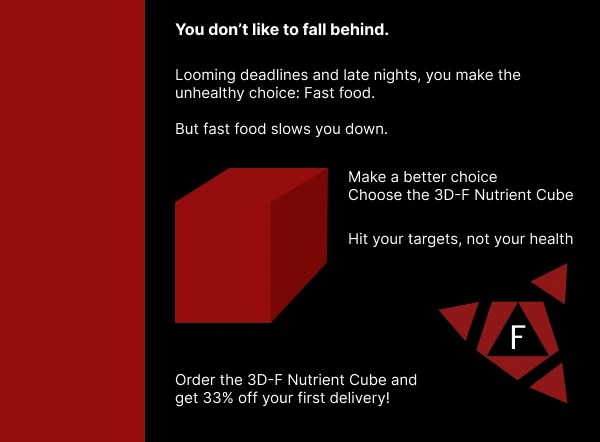
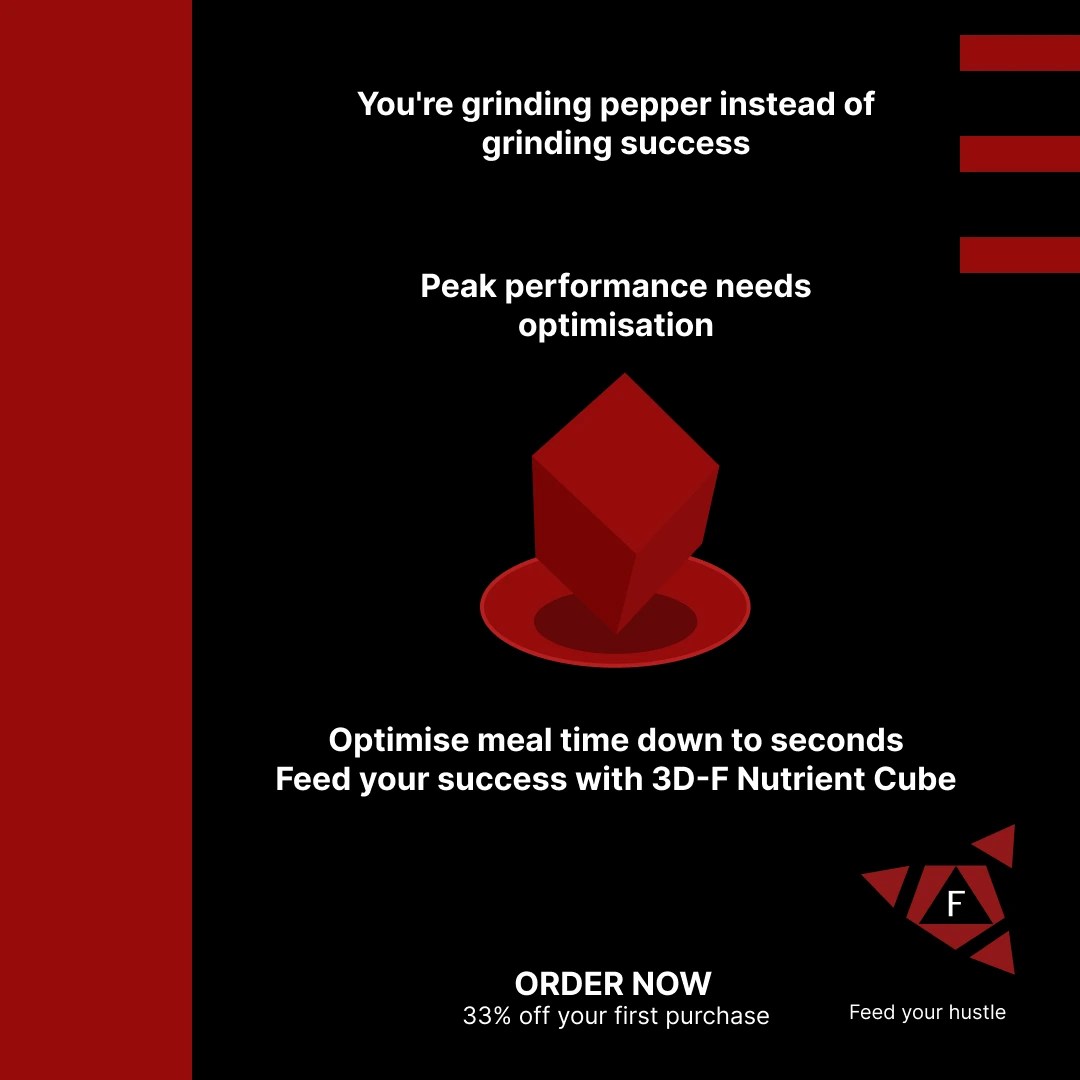
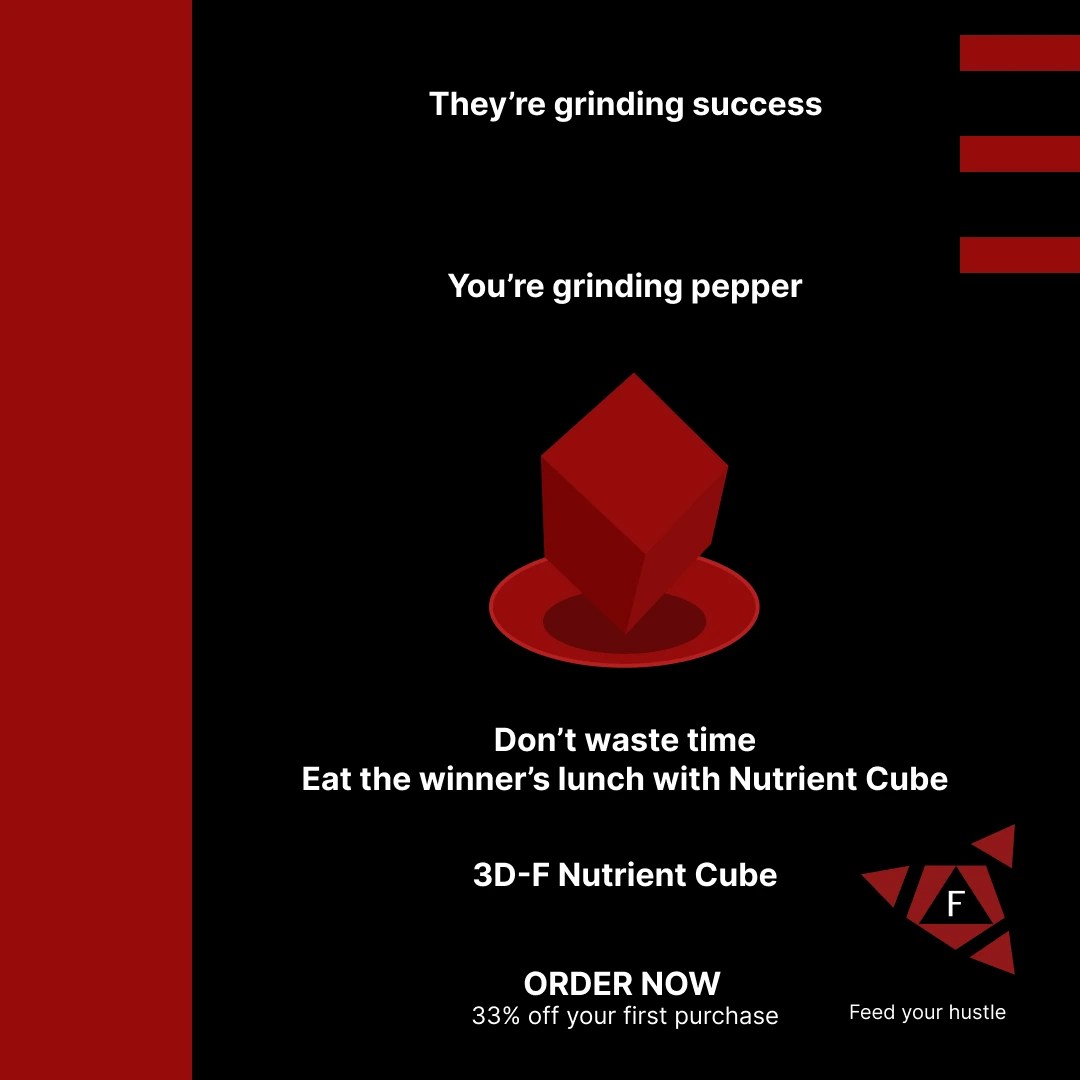
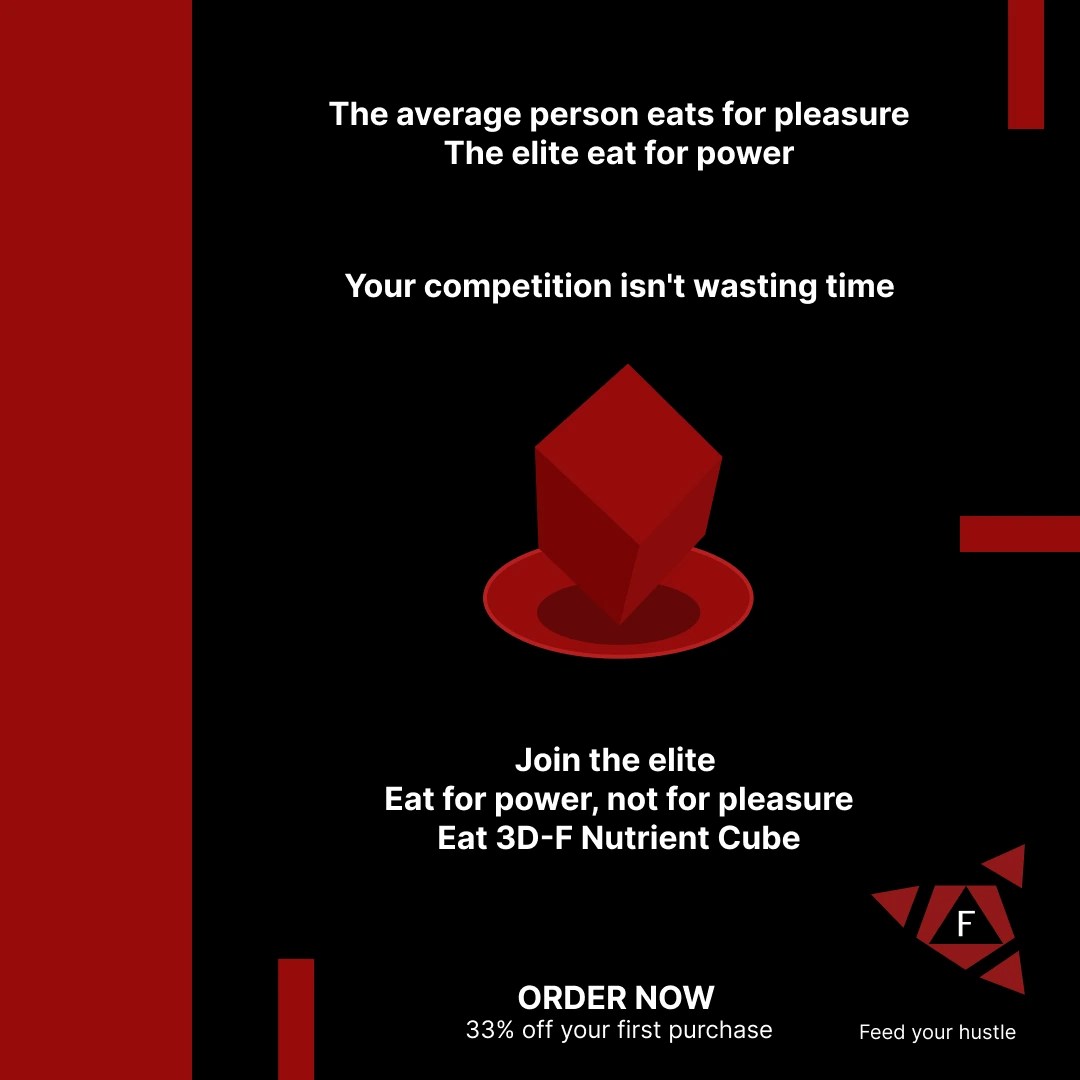
As before, I’m going with the Nutrient Cube concept from the AIDA outline for this example. Up front, PAS doesn’t really fit with this product – there requisite sense of urgency isn’t really there. While the Nutrient Cube does emphasis the aspect of time, the problem it’s addressing isn’t as rooted in high emotion as something like a payday loan company or a gym subscription. There are parallels, but I’m not convinced that PAS would fit as well as AIDA. Regardless, it’s a good experiment with the format to see what kind of copy you can come up with and how the output compares side by side.
Here’s what I ended up with:
Aspiration and abuse in set dressing
Given that we’re dealing with fiction here, however, you’re at liberty to be as exploitative or aspirational and as fits your story or setting. If you’re writing the darkest and grittiest of dystopias, then all of the marketing material is using the PAS formula. You can’t sell so much as a bar of soap without implying that the target leads are going to look like a couch that JD Vance has fucked if they don’t buy that particular brand of soap.
Writing in a darker setting will steer the marketing tone of the world towards the predatory, if not outright abusive, end of the spectrum. The emphasis will be on short term conversion and profiteering as much as possible in the shortest amount of time. The culture it tends to reflect is more volatile, there’s usually a lack of certainty as to whether food and shelter will be available from one day to the next, and an underlying Darwinian survival of the fittest ethos drives the economy. In this setting, most of your advertising would use a PAS-adjacent format.
In lighter and more positive settings you would find a prevalence towards aspiration and brand building as both people and companies will be thinking about the long-term future. They would be focusing on stable growth and consumer trust. The consumer, then, is less harried and less prone to fall for the comparative violence of the fear-focussed PAS format. As such, in this type of setting, your advertising would favour an AIDA-style framework.
Of course, you can manipulate these trends to fit and accentuate themes and ideas. While you might not use PAS to advertise beer in the real world, you could easily weaponise the inherent viciousness of a dystopia to prey on higher levels of alcoholism or drug abuse to sell to them: “forget the Soylent factory, drink blackout juice.” Alternately, a utopia might answer the terror of losing your job or high-interest debt repayments, with a more empathetic step-oriented management service, that is less about short-term loans and the fear of being kneecapped, and more about responsible money management.
A fine line
Honestly, copy written with PAS framework in mind can come out sounding a bit goofy. Which I suppose makes a lot of sense, given that hustle bros are more than a bit goofy. But I guess if you’re looking to write something that sounds like it could have been dribbled out of the vacuous face holes of the Andrew Tates or the Andrew Elliots of the world (if anyone remembers that ‘elite sales warrior’ guy), it fits the tone. You find the most fitting of their many insecurities, you poke at it for a bit, and then you sell them a seminar – I mean, product, sorry – to make the pain stop.
For the setting I think this works nicely enough. I’m not certain I’d be happy to return those to a real-world client, however. Although, I could be wrong – advertising is not, at its roots, industry of artistic creative originality. As I pointed out in my initial post – it’s there to sell you shit, not make you muse about the philosophical implications of ducks. There seem to be a finite number of well-established ways to sell things to people, and sometimes good copy uses a tired formula. Does it make you roll your eyes? Yes. Does it convert better than the avante garde art project alternative? Yes. Just look at Jaguar’s recent ‘Copy Nothing’ rebranding efforts. Ultimately, that’s all that matters.
On the other hand, as stated above, we are dealing with fiction here. Mr. Studd may not get past the Advertising Standards Agency in the real world, but in Cyberpunk 2077, it’s a perfect micro-representation of Night City’s culture. PAS can come across as clumsy in places – evoking a sense of manipulation, which is something a copywriter should strive to avoid. After all, would you buy something from the salesman who talks like a normal human, or the salesman who sounds like they’ve just emerged from a McDonalds fryer? But for a fictional setting like Cyberpunk 2077, and the Cyberpunk genre in general, emphasising this sense of overt greasiness can help to entrench the tone of characters and settings. It doesn’t have to be so over the top as to be parodical, but foregrounding sleaze ambience can produce a dramatic shift in tone to an otherwise less provocative scenario.
 Words and Chaos
Leave a comment