
Social decoherence in the 21st century panopticon and the death of clubbing.
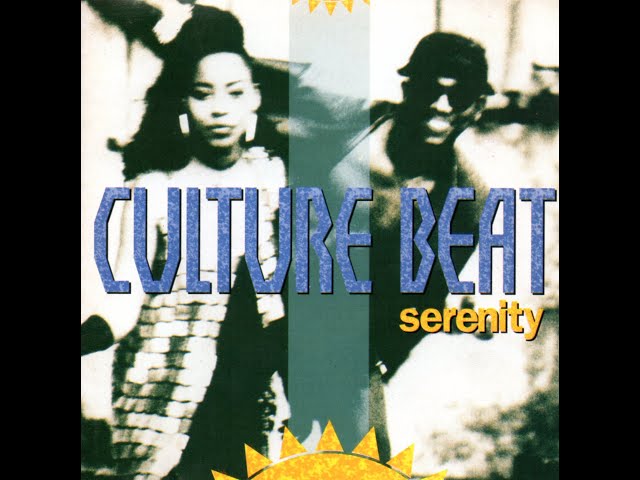
Culture Beat’s ‘Mr. Vain’ released in 1993, on their second album, Serenity. It was a chart topper in 19 countries, including the UK and Australia. Serenity was released under Dance Pool, and hosted several singles, Mr. Vain amongst them. While the single’s success was inarguable, Serenity’s overall reception was, at best, mixed. Critics shrugged off the German Eurodance group’s offering as repetitive, if generally competent. Mr. Vain was understood to be the unquestioned standout hit of the album, with other tracks being either indistinguishable from one another or simply borrowing excessively from competing artists of the era.
The track itself is a bouncy fast-paced jaunt dominated by fizzy synth keys, and, curiously, shares a tone and tempo with the Mortal Kombat theme. The chorus hook is the main character of the song, with an energetic upbeat vibe and a clear identifiable melody. This contrasts with the comparatively downplayed verses, which are dominated by Jay Supreme’s rapping over a bass line that functions almost like a second kick in its rapid-fire delivery of monotone bursts. The drums are functional and unremarkable, serving more as a utility than an instrument. As you’d expect nothing dares to break from the eternal overreliance on 4/4 stomper rhythms that pervade so much EDM music. There’s a supporting airy synth that floats in every so often, but as with the rest of the song, there’s nothing that stands out in any way.
Given how musically generic the track is, I am surprised that it gained the status that it did. Or maybe it remains a serious condemnation of electronic music in general that the entire genre seems to have barely moved in decades. If this is the best song on Serenity, how uninspired is the rest of it? Eurodance is firmly established to be goofier than a Saturday morning Disney cartoon. But I can only wonder whether Mr. Vain would have stood out at all, if the chorus weren’t so goofy? The straight-faced delivery of the lyrics is what makes the song. Maybe it’s just the layers of meta-ironic social armour that encases all communication in the 21st century, but pop music produced in the 90s had a level of earnestness to it that, through the jaded eyes of millennials and Gen Z, is downright bemusing.
There’s a lack of self-awareness involved with the aesthetics of 90s pop music, that perfectly highlights the divide between the pre- and post-Internet world. Although, I guess the late 90s and early 2000s gave us bands like Sugar Ray and Crazy Town, who were desperately trying to be, simultaneously, edgier than Boyzone, but without sacrificing mass appeal. Their answer to this seems to have been to don wife beaters, gel their hair into spikes and make songs that were slightly more overtly sexual, but without being blunt enough to qualify them for post-watershed status. Nevertheless, Culture Beat’s dancefloor hit has a self-serious tone that seems to be completely oblivious to the absurdity of its premise. So, a question:
What kind of bizarre edgelord walks around calling themselves ‘Mr. Raider’?
In the UK, clubs are going extinct as modern socialising confronts us with the fascinating dichotomy of a world in which mayfly TikTok dance trends are born, flourish, and die in the span of a day, colliding with the meat-world reality that people do not really want to go to clubs anymore. Allegedly people go to clubs to dance, but in the modern autophagic ecosystem, dancing no longer represents, as someone once artfully put it, the vertical expression of a horizontal desire. It is just another desperate ploy for greater metrics on social media. Through that lens, clubs have lost their social purpose.
There’s always been a rampant strain of performativity to clubbing. I guess that’s because they’re basically sinkholes for mass directionless mating displays coagulating into a multi-tiered box of sticky floors, forced smiles, and half-heard conversations with people you won’t recognise in the morning. And this is what lends a nightclub that quintessential seething atmosphere of desperation that pervades all of them from top to bottom, and all but ensures that you will be drinking copiously. Because as soon as you imbibe enough alcohol, or take enough MDMA, to accept that you actually agreed to be there, you can start to convince yourself you’re enjoying the experience. Well, ok… I’m not sure how, for instance, The Macarena, ever expressed a desire for, in the quiet words of Mr. Durst, THE NOOKIE… nevertheless, clubs don’t really work in the 21st century. The only people who seem to frequent them are weird incel influencers, straining to look simultaneously bored and cool in dingy high-cushioned booths, surrounded small contingents of escorts with fishhook smiles and eyes that betray a profound desperation to just get paid and get out.
Back in the day you could go and get drunk in clubs. In fact, that was pretty much the only way to survive clubbing. Which is why they feel comfortable charging double the normal rate for a bog-standard drink. When the night was over, you staggered out into the street at 5AM and assaulted the nearest kebab shop with barely coherent demands for a large amount of approximated meat from a rotating trunk that looked vaguely edible. It was greasy, served in a pita bread, and doused in sauce. Salad? Err… yeah, sure, mate, whatever.
The techno-panopticon of social media has killed clubbing. You cannot go out now and get fucked up, because everyone has a phone with high-definition video, and an instant upload to Instagram. Everybody knows that if you get drunk and do something stupid, it will appear on social media. If you’re lucky, it doesn’t get around. But business and industry have colonised your personal life enough for recruiters to make a job of scanning the internet for ‘incriminating’ content. With the ever-worsening degrading race-to-the-bottom that characterises the job market, you can be sure that footage of you having a good time with your friends, will provide an easy excuse to exclude you from the rat race.
Which is just as well, because the chairman’s daughter’s ex-boyfriend, fresh out of business school, is now running the company and you never had a chance anyway…
So now we have the Mr. Vain’s of Tinder, Hinge, and Bumble. And instead of paying money to get shit-faced and flail around like a cadre of epileptic pandas, we send dick pics for free and demand nudes in all caps. What’s your name? Who cares. What does your cunt look like?
That’s social progress right there.
The techno-panopticon of the 21st century has transformed clubs from places of post-work catharsis, separated from the everyday world, to an environment where the risk of participation outweighs the benefit of being able to let loose. The previous temporary paranoia of looking like an idiot for a few hours or saying something stupid, has been replaced with the permanent paranoia that to look like an idiot for a few hours or say the wrong thing, will never be forgotten. The paranoia that every misstep will be archived for future recall, allowing complete strangers to weaponise your ability to enjoy yourself against you, in repeated rituals of social brutality.
If the paranoia still isn’t intense enough, you can always trying meditating on your most unflattering moments pulled out like a shiv in some theoretical job interview. A back-alley street fight dragged into an office block, where a hiring manager might take it on themselves to adopt the mantle of a self-appointed judge, jury and executioner. The law of the jungle grafted onto civilisation, where dropping the mask is equivalent to the crack of a twig underfoot moments before a blood-for-blood ambush.
Even goofy idiots who lack the self-awareness to forego stalking over to hapless women on a darkened dance floor and, over the continuous thump of 120 BPM 4/4/ stomper, demand, apropos of nothing, that you call them ‘Mr. Raider’, cannot be sure that this bizarre behaviour won’t appear on Reddit or X and be used as a vector for mass excoriation.
It’s far safer to dance sober and alone, in your rented room in front of a web cam, and hope that the algorithm likes you enough to gain influencer status. Then at least you can build a portfolio of parasocial relationships and make money from donations. Play your cards right and you can sell “1 on 1” chats, where you hire people to imitate you, and then milk the desperately lonely and the chronically naïve for what little they’re worth. Or you can pretend to be an entrepreneur and sell courses on making it big, casually downplaying the freak rash of luck that catapulted you into the spotlight to start with. If all else fails, there’s always crypto scams…
The rules for socialising and survival in the precarity-based neoliberal ecosystem seem to imply preaching for connection while actively avoiding it.
 Words and Chaos
Leave a comment