From QotSA’s psychological stone age to the bronze age mental collapse
Roots dug in desert rock
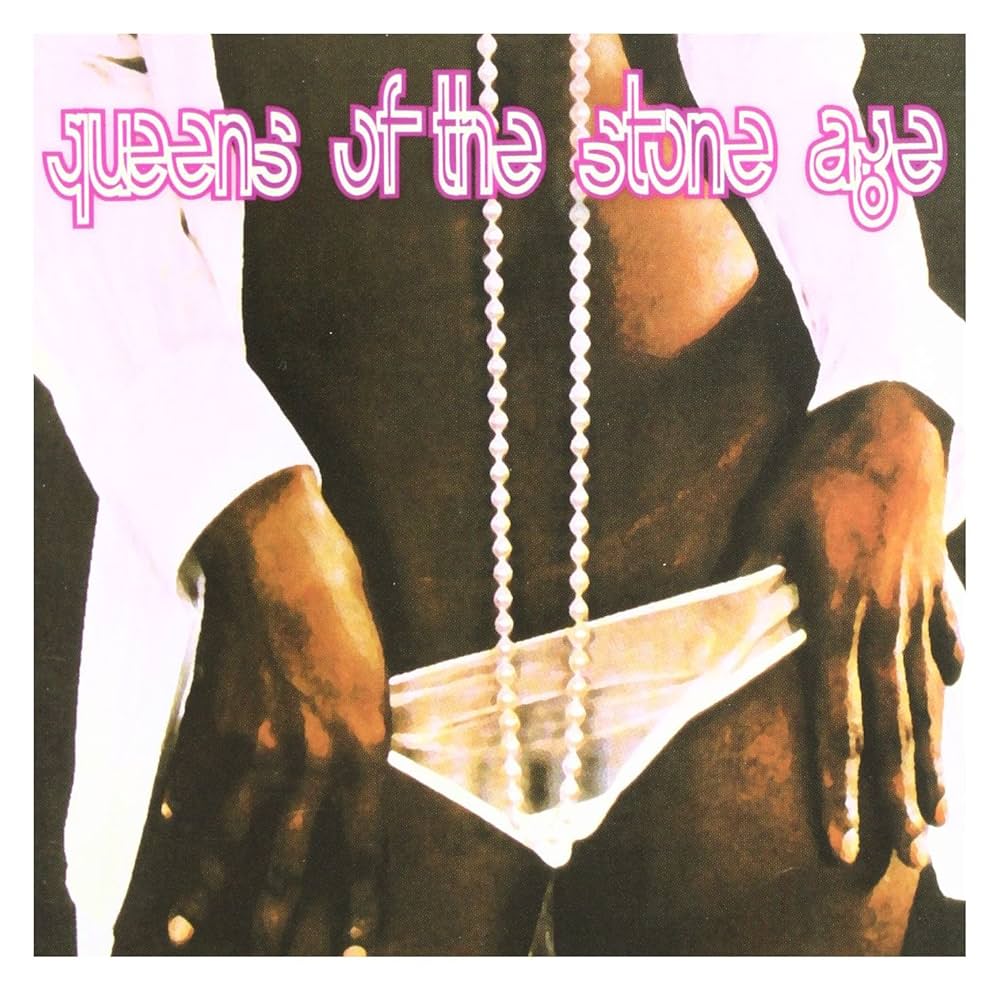
The Bronze is the 6th track of Queens of the Stone Age’s 1998 self-titled debut album. The band is now arguably the most famous group in the desert rock scene, with frontman Josh Homme coming from desert-rock royalty Kyuss, although more sand-addled aficionados with greater genre knowledge could no doubt tell me that I shouldn’t speak.
The album was received well, and Queens of the Stone Age demonstrated a now characteristic willingness to break with the usual, often one-dimensional, tropes of the broader stoner rock subgenre. Songs like ‘You Can’t Quit Me Baby’ and ‘I Was a Teenage Hand Model’ perhaps set some foundations for Queens of the Stone Age’s later experiments with their sound.
They’ve been a clear and persistent inspiration for other bands across genres, and certainly become templates for other bands working in their niche, with examples like Slomosa’s ‘In My Mind’s Desert’ bearing more than a little resemblance to ‘Give The Mule What He Wants’.
Dragged through the desert of the real
The Bronze starts out with an unexpectedly ambient intro, fuzzing echoing individual notes plucked one by one and then fading out before the band launches into the main song. The relaxed ambience gives way to a continuous sense of movement across open space with constant 16ths on the cymbals underpinning the lingering drawn out notes. Despite all this momentum, the vibe is mournful. In comparison to many songs with this sort of pacing, the sense isn’t one of directed intention; but rather a quietly growing desperation.
Despite its sense of momentum, the song isn’t particularly fast. The groove is as measured and spaced as anything you might expect from the band, not unlike Go With The Flow. However, the drums are noticeably more insistent and the background ululating whine of the rhythm guitar adds a sense of disquiet that isn’t present in the more easily digestible Go With The Flow. Nevertheless, QotSA never fail to evoke an impression of blitzing along an open motorway, a visual we’ll return to.
It’s an impressive bit of songwriting to convey that sense of movement in a fairly unintuitive way. Momentum isn’t difficult to generate. Meshuggah’s 2008 masterclass, obZen, opens with the blistering headbanger, ‘Combustion’, which slams along with uncompromising ferocity, but the way in which it achieves that is pretty simple; relying almost entirely on a four-minute beatdown of one-two punches. While Combustion is a bare-knuckle charge towards an identified target, The Bronze carries the impression of aimless drifting or being pulled along at speed, without much rhyme or reason, and little control.
Time you enjoy wasted…
Thematically, The Bronze seems to reflect a deepening sense of being lost. Coupled with the aforementioned impression of being pulled along, it could point to the passage of time as a foundational motif. Specifically, the sense of time passing, of being lost, of years sliding by without you noticing them. That terrible undercurrent that suggests you are not keeping up, haven’t used your time wisely enough. Confoundingly, it is often the case that, if one attempts to work out how to solve this alleged problem, they can find that it’s an open question. What in the hell were you supposed to do?
This sense of time passing is reflected in the allusions to the sunrise and later, of waking up confused, “every day sit up and wonder where it was I started from.” This is coupled with a sense of exhaustion and of being burdened, “you can own it, take it of my hands, do me a favour,” adds further weight to the central theme of reflecting on who you have been vs who you are now, how your perceptions change of the world, your actions and their impacts, and your shifting priorities as you age.
The song ends with an image of the voice effectively turning in circles, searching for some sign or landmark from which to discern a direction, and not finding one. This is followed by what seems to be a desire to retrace his steps, to go back, fix mistakes. But, as the philosopher Heraclitus noted, a person cannot step into the same river twice.
This is a song about getting wiser in the worst way and ends with a suitably fitting refrain, “The more you’ve found, the less you’ve been around.” Reflecting the common conclusion that, whether you ever knew it or not, you have very little control and plans are fragile at best.
Maybe that’s just a point you inevitably reach. Get past a certain number of years and you get all the previous ones served back to you with a side of bitter sauce, like the world’s worst buffet. All you can eat. Dig in.
Seems like the end point of wisdom is simply the deepening realisation of your own folly. The only outcome of amassing more wisdom, if that is possible in the first place, is just a growing awareness of all the things you don’t know and every misjudgement you’ve ever made. Which, honestly, doesn’t say much for wisdom, but fits the weary, lost tone of the song. Or perhaps I’m just mistaking disillusionment for wisdom…
 Words and Chaos
Leave a comment